Suntec REIT Slips to a 52-Week Low: Reading the Signal in a Sector-Wide Selloff
Suntec REIT closed at S$1.33, its 52-week low, as S-REITs sold off broadly. What the results, gearing and 0.65x P/B say about the longer view.
Suntec REIT (SGX: T82U) closed at S$1.33 on 18 November, down 2.21% from S$1.36, and that print was a fresh 52-week low. It was one of the weaker showings among Singapore-listed REITs, and it left the units 14.74% below their 52-week high of S$1.56 and 5.67% lower year to date.
The important part for anyone holding the stock: I found no Suntec-specific announcement, results release or broker downgrade dated to that session. The fall happened in a broad market retreat. The Straits Times Index dropped 1.06% to 5,054.89, its fifth consecutive decline and its lowest close in about five months, with an RSI of 22.3. Singapore REITs were hit harder than the index.
Local coverage attributed the session’s weakness to a hawkish tilt in US rate expectations, a tech-led selloff on Wall Street the night before, and firmer oil prices tied to Middle East tensions. All of that flows straight into REIT valuations, because higher discount rates and higher bond yields make a 6% distribution less compelling.
Turnover was about 8.3 million units against a 20-day average of roughly 8.0 million. That is ordinary volume, not capitulation. Worth adding: the units went ex-distribution on 29 October for the 2.017 cent third-quarter payout, payable 27 November, which mechanically explains part of the one-month softness without any change in the business.
What Suntec REIT actually owns
Suntec REIT is Singapore’s first composite REIT, listed in December 2004, with about S$12.2 billion in assets under management across 10 properties: three in Singapore, five in Australia and two in London.
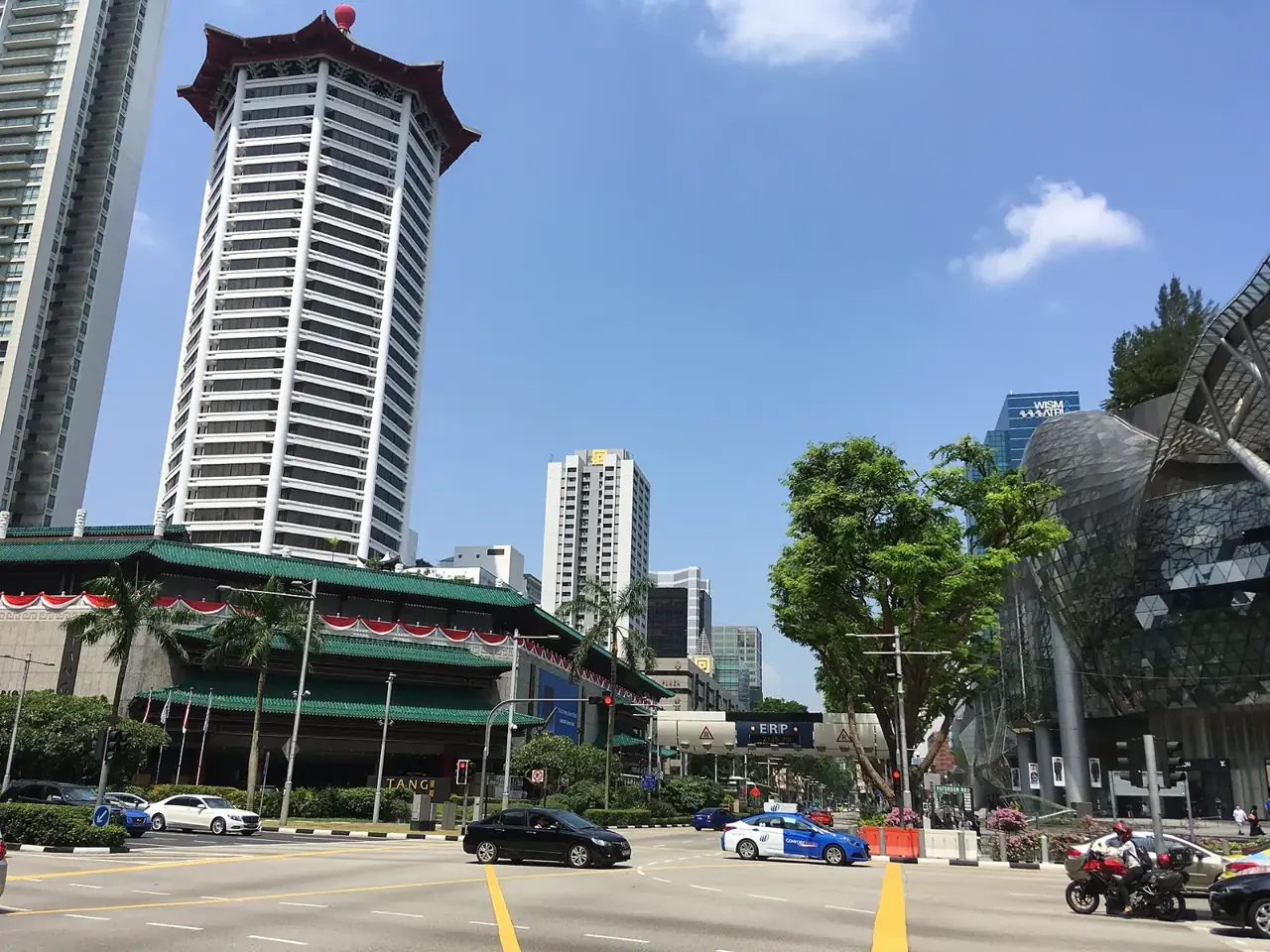
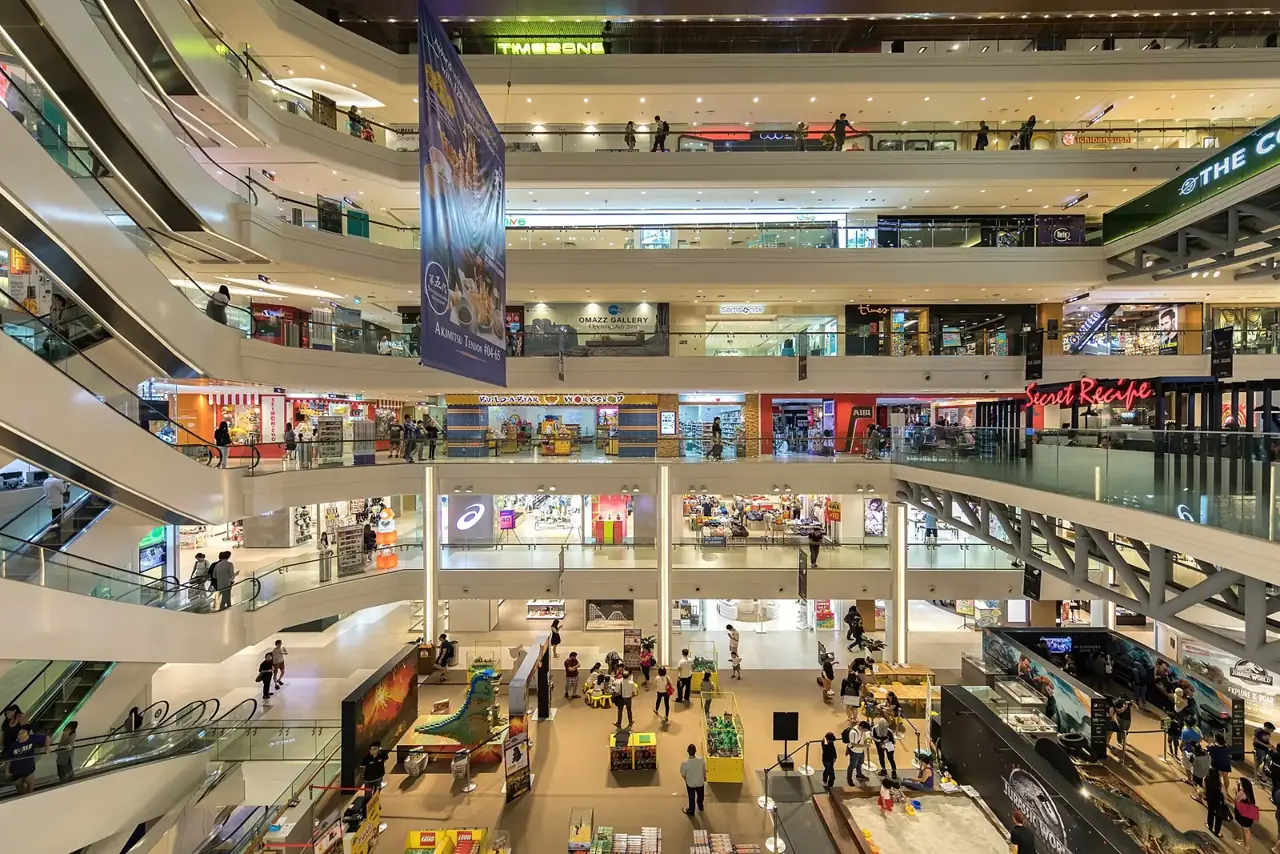
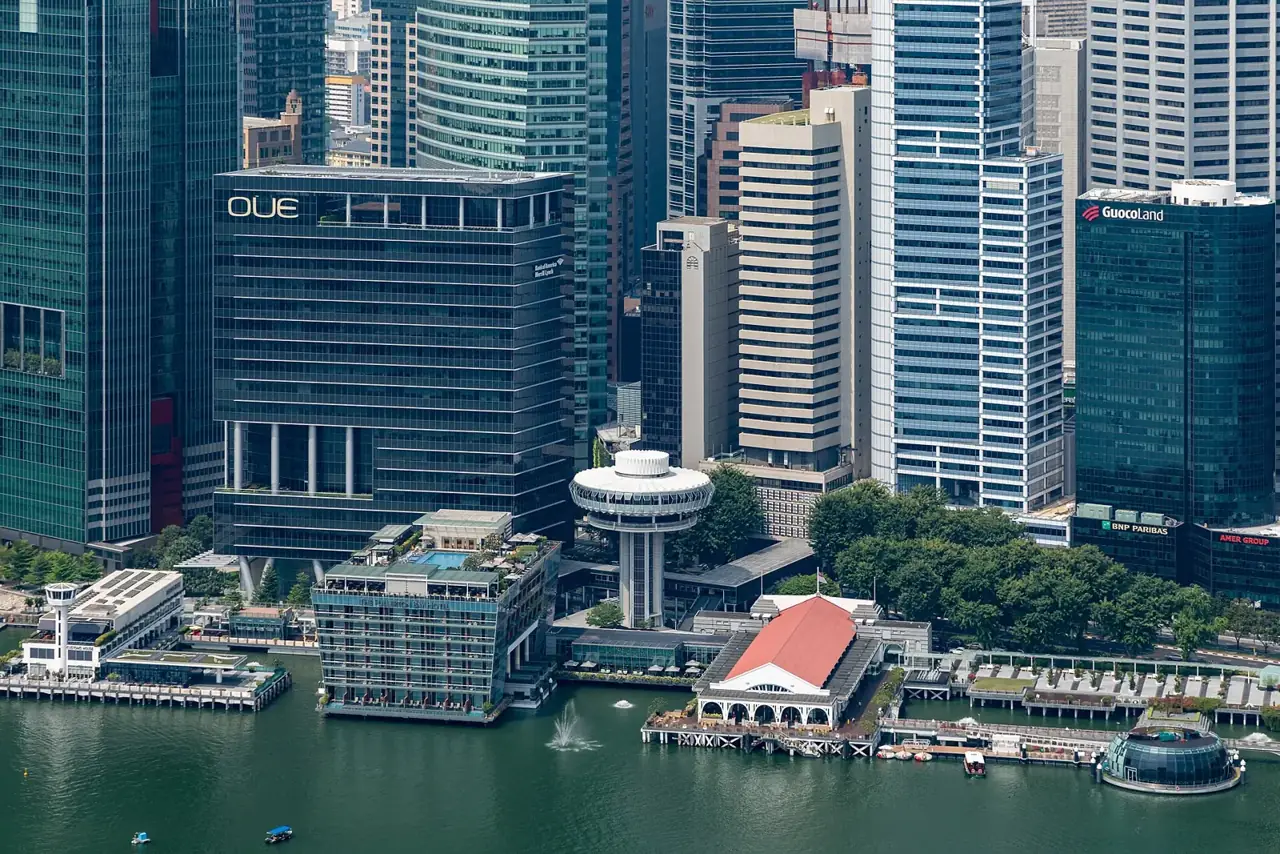
The income comes from three places. First, Suntec City, where it owns the office towers and one of Singapore’s largest malls outright. Second, a 66.3% interest in the Suntec Singapore Convention & Exhibition Centre, which earns from MICE events and feeds footfall into the mall. Third, stakes in the Marina Bay cluster: one-third of One Raffles Quay, and one-third of Marina Bay Financial Centre Towers 1 and 2 plus Marina Bay Link Mall. Those last two are associates, so their contribution arrives as share of results rather than rental line items.
Roughly speaking, the Singapore core supplies the bulk of net property income. Australia and London add diversification but also currency exposure, overseas interest costs and, in the case of some Australian assets, weaker occupancy.
The third quarter was genuinely good
For the quarter ended 30 September 2026, reported on 22 October, distribution per unit rose 13.4% year on year to 2.017 cents. Distributable income climbed 14.3% to S$59.9 million, gross revenue 5.2% to S$123.6 million and net property income 6.2% to S$83.4 million. Excluding a S$2 million Australian withholding tax reversal booked in the prior-year quarter, DPU growth would have been about 18%.
Operations were firm. Singapore office occupancy was 99.6% and mall occupancy 98.6%. Rental reversions came in at +7.3% for office and +11.2% for retail, and the manager guided to full-year retail reversions of around 10%. Tenant sales at Suntec City Mall grew faster than shopper traffic, helped by a luxury watch retailer’s vault sales in August 2026. The all-in financing cost eased to 3.57% from 3.71% at the end of 2025, which is why 9M2026 DPU rose 20.7% year on year to 5.953 cents.
The counterweight is the balance sheet. Gearing stood at 43.0% with an interest coverage ratio of 2.3 times, which is tighter than most large S-REIT peers.
That is why the portfolio reconstitution announced on 21 September matters. Suntec has launched sale campaigns for 177 Pacific Highway and 21 Harris Street in Sydney and its 50% interest in 477 Collins Street in Melbourne, valued at about S$1.04 billion in aggregate. Expressions of interest closed in early November, with the earliest completion in 1Q2027. Management expects a successful sale to cut gearing below 40% and reduce the drag from higher Australian borrowing costs, leaving room for acquisitions, unit buybacks or a capital distribution.
Valuation
At S$1.33, the stock trades at 0.65 times book, against net asset value of S$2.04 per unit as at 30 September 2026, and offers a trailing distribution yield of 5.93%. The 9M2026 payout of 5.953 cents annualises to roughly 7.9 cents, consistent with that yield. The reported P/E of 13.3 is less informative for a REIT, since distributions rather than accounting earnings drive returns.
For context, here is how Suntec stacked up against two other names highlighted in a 15 November 2026 comparison, priced as at 13 November:
| REIT | Trailing yield | Gearing | DPU trend |
|---|---|---|---|
| Suntec REIT (SGX: T82U) | 6.0% | 43.0% | Rising |
| NTT DC REIT (SGX: NTDU) | 5.9% | 31.0% | Maiden payout |
| Stoneweg Europe Stapled Trust (SGX: SET) | 9.0% | 43.6% | Rising |
Suntec’s yield sits in the middle of that trio while carrying more leverage than the data centre play. Its discount to book is the widest part of the story.
Bull case
Singapore is the strongest part of the portfolio and it is performing: near-full occupancy, positive reversions, and convention bookings described as healthy with growth expected in 2027. Financing costs are falling as older loans roll off. If the Australian sales complete anywhere near book, gearing drops below 40%, interest cover improves, and the manager gains room to buy back units at a steep discount to NAV, which is accretive for remaining holders. A market that reprices REITs for a lower rate path would do most of the work on the valuation gap.
Bear case and risks
Gearing at 43.0% and interest cover at 2.3 times leave limited room for error if rates stay higher for longer. The sales are not certain: the manager has stated there is no assurance a binding transaction will materialise. The three assets on the block are the well-leased ones, while Southgate and 55 Currie Street carry weaker occupancy, so the remaining Australian book may be harder to exit later. Proceeds used for a capital distribution or buyback flatter near-term DPU without adding earning capacity. Currency movements in Australia and the UK cut both ways. And the Suntec Convention business flagged that some international delegates remain watchful over the haze situation.
The bottom line
The 18 November decline looks like a rate-driven, sector-wide de-rating rather than a company-specific verdict. Nothing reported that day changed the rental reversions, the occupancy or the divestment timetable. What has changed over 2026 is the price investors are willing to pay for those cash flows, and at 0.65 times book with a 5.93% yield, the market is already assuming a fair amount of bad news on rates and on the Australian exits. The items that will settle the argument are the sale outcome and pricing, gearing after completion, the use of proceeds, and whether Singapore reversions hold near double digits. Those are the checkpoints to watch, not the daily tape.
Sources
- CGSI downgrades Suntec REIT; RHB lowers target price despite ‘strong’ 3QFY2026
- Suntec REIT (SUN SP): 3Q26: Expression Of Interest Exercise To Divest Australia Assets
- Is the Great Singapore REIT Comeback Finally Here?
- STI Extends Losing Streak, Hits Lowest Since June
- Daily Markets Briefing: STI down 1.06%; Top stock is JMH USD