3 Singapore REITs With Yields of Up to 7.7% to Watch
CapitaLand China Trust, Starhill Global REIT and CapitaLand Ascott Trust all yield above 7% on trailing payouts, but the quality of each distribution differs.
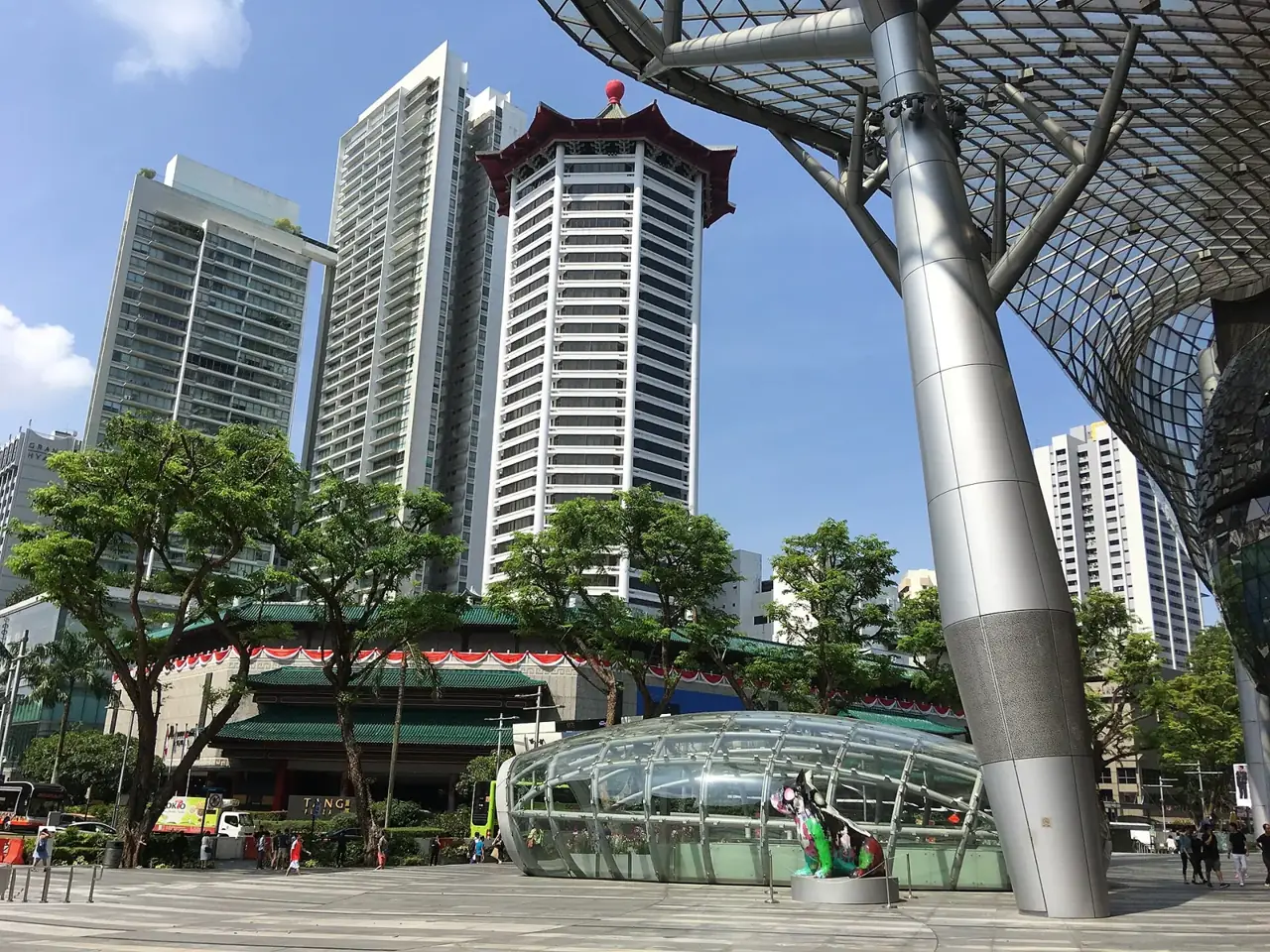
The Straits Times Index ended the 6 November session at 5,179.17, down 2.21%, capping a week in which it lost 3.67%.
For income investors, a sell-off like that cuts both ways. Prices fall, but the yield on offer rises. The three names below came out on top of our DailyMarket SG watchlist screen, which ranked REITs by trailing dividend yield and applied a small penalty to counters sitting far below their 52-week high, so a deep price fall alone would not carry a stock into the list.
We then re-checked each yield against declared distributions. Two came in slightly above the raw screen; one came in below. Where they differ, we use the figure built from actual payouts.
| REIT (code) | Close, 6 Nov | 52-week high | Below high | Trailing yield | Gearing |
|---|---|---|---|---|---|
| CapitaLand China Trust (SGX: AU8U) | S$0.625 | S$0.81 | 22.8% | 7.7% | 41.1% |
| Starhill Global REIT (SGX: P40U) | S$0.485 | S$0.60 | 19.2% | 7.6% | 35.8% |
| CapitaLand Ascott Trust (SGX: HMN) | S$0.845 | S$0.99 | 14.7% | 7.2% | 37.1% |
CapitaLand China Trust (SGX: AU8U)
This is the largest China-focused S-REIT on SGX, with about S$4.6 billion in total assets. The portfolio runs across eight retail malls in five Chinese cities, a business park platform anchored by Ascendas properties, and a smaller logistics park segment. Retail contributes roughly 70% of gross rental income, and sponsor CapitaLand holds about a 25% stake.
The screen showed 7.9%. Checked against declared payouts, FY2025 distributions totalled 4.824 cents per unit, which on a S$0.625 price gives 7.7%. That is the number we use; the gap is small and likely reflects the exact price and payout window used by the data provider.
The track record is the first thing to weigh. DPU went from 6.74 cents in FY2023 to 5.65 cents in FY2024 and 4.824 cents in FY2025, a fall of about 28% over two years. The first half of 2026 continued the drift: 2.45 cents, paid on 9 September, against 2.49 cents a year earlier.
What still supports the payout is operating cash flow from a large retail base. In the nine months to 30 September, revenue fell 4.8% to RMB1.22 billion and net property income fell 3.9% to RMB820.6 million. Strip out the 2026 divestment of CapitaMall Yuhuating and same-store net property income was down just 0.8%. In Singapore dollar terms, net property income actually rose 1.9%, helped by the yuan strengthening about 2.6% against the Singapore dollar. Retail occupancy held at 97.2%, tenant sales grew 3.5% and shopper traffic rose 1.9%. Gearing stood at 41.1% with interest cover of 3.0 times.
The risk sits in the office parks and in the currency. Business park renewal rents reset 12.6% lower over the nine months, a deeper cut than the 8.9% a year earlier, with business park occupancy at 85.7%. Retail renewal rents were also negative, at minus 3.0%. And the Singapore dollar cushion is coming from the exchange rate rather than from rent growth, which is not a durable source of support.
Starhill Global REIT (SGX: P40U)
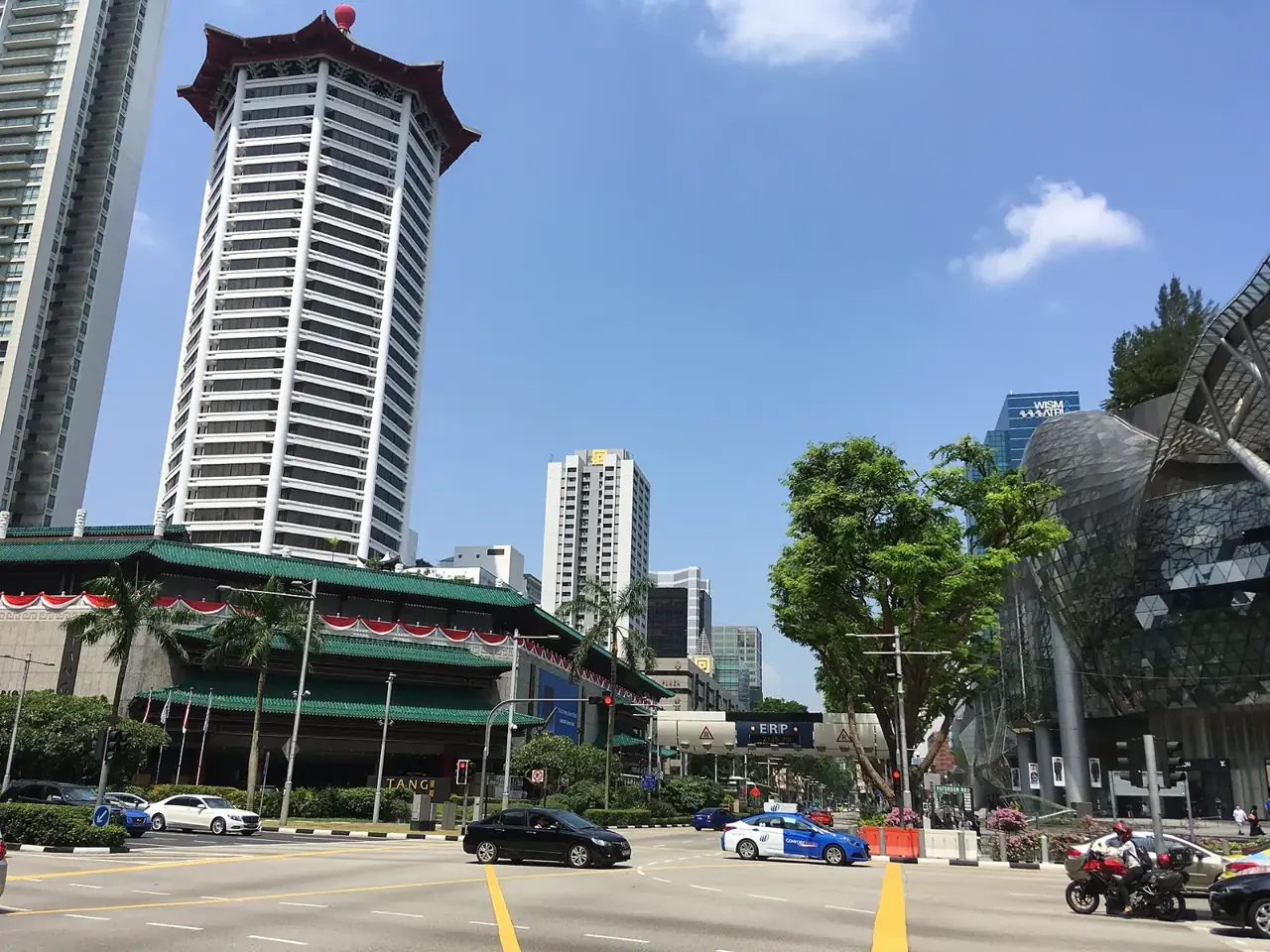
Starhill is the YTL-sponsored REIT built around Orchard Road. Ngee Ann City and Wisma Atria are the Singapore anchors, alongside Lot 10 in Kuala Lumpur, assets in Australia and a China property. The portfolio was valued at about S$2.7 billion at the June year end, with committed occupancy of 97.2% and a weighted average lease expiry of 7.0 years. The trust moved its financial year end to 30 June to match its sponsor.
On the 7.52% screen yield, we checked the FY2026 payout: DPU of 3.68 cents for the year ended 30 June 2026, which on S$0.485 works out to 7.6%. That is marginally higher than the data, so we use 7.6%.
Growth is thin. FY2026 DPU rose 0.8%, and the second-half distribution of 1.88 cents was up 1.6% year on year. Revenue for the year edged 0.2% higher to S$192.5 million, net property income rose 0.1% to S$150.3 million, and income available for distribution grew 1.7% to S$89.3 million. The manager retained about S$2.5 million of that for working capital.
The balance sheet is the strongest of the three on headline measures. Gearing was 35.8% at 30 June 2026, about 80% of debt was on fixed rates, and average debt maturity was 3.3 years. Net asset value per unit was S$0.71, so the S$0.485 price is roughly 0.68 times book.
One point on the last session: the units fell 3.0% to S$0.485, a 52-week low, on a day when the benchmark index lost 2.21%. We found no company-specific announcement to explain the move, so it looks like sentiment rather than news. The main dividend risk is the flat growth profile. FY2026’s small gain leaned on cost control, lower finance costs and currency translation gains from the ringgit and Australian dollar, while the Australia, China and Wisma Atria assets were revalued downwards in June. With gearing already at 35.8%, any acquisition push mentioned by management would need careful funding.
CapitaLand Ascott Trust (SGX: HMN)
CLAS is a stapled group, combining a REIT and a business trust, and the largest lodging trust in Asia Pacific: 106 properties with more than 19,000 units across 45 cities and 16 countries, and about S$8.9 billion of asset value at 31 March 2026. Hotels make up under 40% of portfolio value, with the rest in serviced residences, rental housing and student accommodation, which is the more contracted, less cyclical part of the book.
The screen showed 7.19%. The verified figure uses the trailing 12 months of declared payouts: 3.58 cents for 2H 2025 plus 2.532 cents for 1H 2026, or 6.11 cents, which at S$0.845 gives 7.2%. For context, the manager itself calculated a 6.9% trailing yield based on the 30 June 2026 price of S$0.885.
The headline distribution has been held flat: 1H 2026 DPS of 2.532 cents matched the prior year, and total distribution rose 1% to S$97.5 million while income available for distribution rose 11% to S$107.1 million, with S$9.6 million of non-periodic items retained. Gearing improved to 37.1% in the third quarter from 37.7% at June, effective borrowing cost was 2.9%, about 80% of debt was fixed and interest cover was 3.0 times.
Operationally, third-quarter revenue per available unit was S$164, up 0.6% year on year and 5.6% quarter on quarter, or 4% higher on a same-store basis. US performance was boosted by the World Cup, US Open and Fashion Week, and US student accommodation is running at 98% occupancy for the 2026/27 academic year with revenue expected to be about 7% higher. Capital recycling has been active: The Robertson House was sold for S$360 million at a 2.3% exit yield and a 4% premium to book, with a net gain of about S$38.1 million, and Coliwoo Midtown was acquired for S$134 million at a 4.1% EBITDA yield.
The risk is what sits under the flat headline. Core DPS fell 10% to 2.16 cents from 2.40 cents, and the gap was filled by non-periodic gains. The manager has roughly S$300 million of past divestment gains available for top-ups, but that is a finite buffer. Of the 2.532 cents paid for 1H 2026, 0.382 cents, or 15.1%, was a capital component, which is a return of capital rather than income. Borrowing costs are also expected to drift up to about 3.1% in FY2027 as yen loans reprice, and hospitality earnings remain cyclical.
The runners-up
Three names missed the cut. Mapletree Industrial Trust (SGX: ME8U) screened at 6.97% on a S$1.74 close, 17.5% below its high. Mapletree Pan Asia Commercial Trust (SGX: N2IU) showed 6.55% at S$1.18, 20.3% below its high. Frasers Logistics & Commercial Trust (SGX: BUOU) came in at 6.38% on S$0.925; it had the smallest drawdown of the group at 11.9% below its high, so the penalty for distance from the peak worked against it rather than for it.
The bottom line
A 7% plus yield is a starting point, not a conclusion. Three things separate these payouts.
First, direction. CLCT’s DPU has fallen three years running, Starhill’s grew less than 1%, and CLAS’s core DPS dropped 10% even as the headline held. A yield built on a shrinking distribution tends to shrink with it.
Second, what pays for it. Cash flow from occupied space is durable; currency gains, divestment gains and retained non-periodic items are not. CLCT’s Singapore dollar uplift came from the exchange rate, and part of CLAS’s payout came from capital and one-off items.
Third, the buffer. Gearing of 41.1%, 35.8% and 37.1% with interest cover around 3 times leaves less room than the sector’s stronger balance sheets. Higher-for-longer financing costs flow straight into distributable income.
A lower, better covered yield and a higher one that needs help to stay flat carry different risks.
Sources
- CAPITALAND CHINA TRUST MANAGEMENT LIMITED : 05-Aug-2026
- Starhill Global REIT - Investor Relations: Interactive Charts
- CapitaLand Ascott Trust delivers stable DPS of 2.53 cents in 1H 2026
- Distribution History
- CapitaLand Ascott Trust (CLAS SP): Sturdy Recovery From Student Accommodation In 3Q26; Strong Reversion From Rental Housing | Research | UOB Kay Hian Singapore
- STI closes 2.2% down following global tech stock slides
- Singapore tech stocks plunge as Nasdaq bloodbath spills into region