3 Singapore Dividend Stocks With Yields of Up to 6.7% to Watch
Three non-REIT SGX names screen well on trailing yield, but the payouts behind them are built very differently.
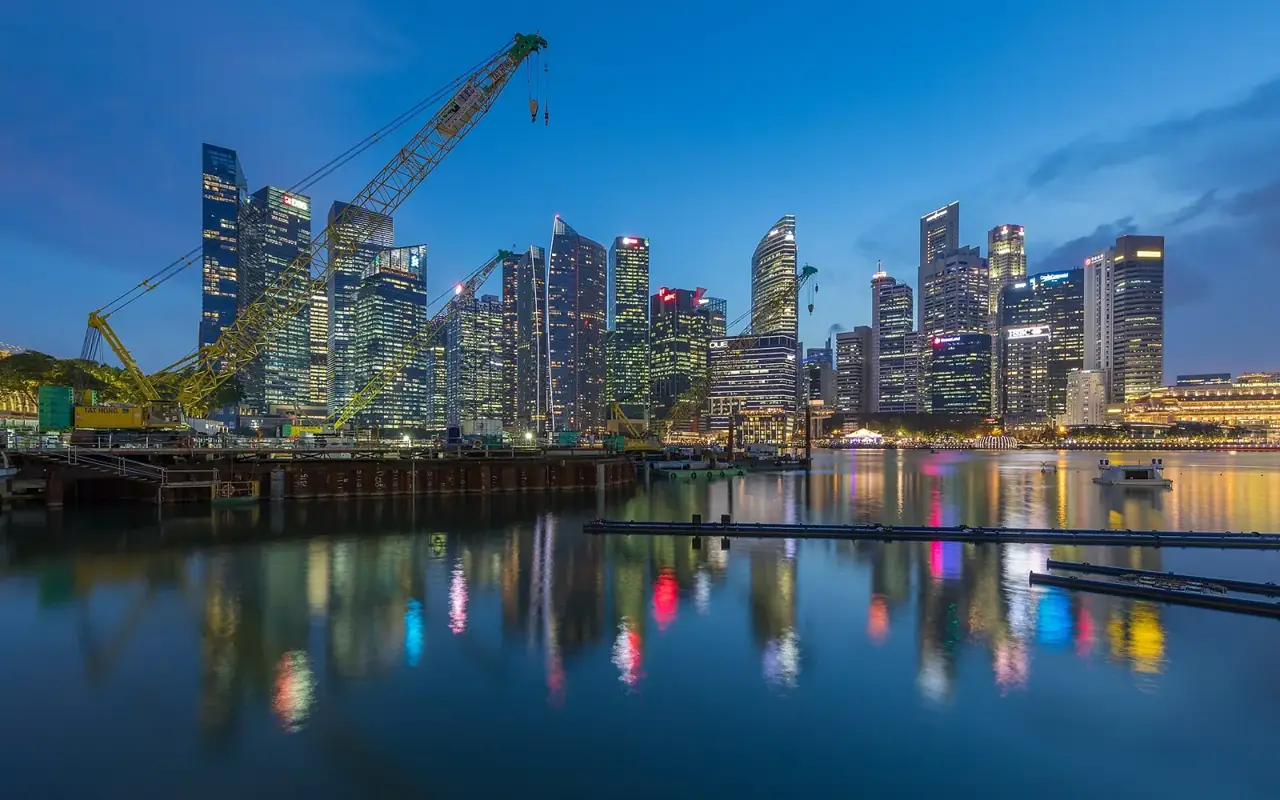
The Straits Times Index closed the 4 November session at 5,268.63, down just 0.01% on the day, but it has given up 7.59% over the past month even as it stays 13.15% higher year to date. With the index 9.19% below its 52-week high and momentum soft, income investors are again working through the non-REIT side of the market for payouts that do not depend on interest rates staying high.
The three names below came from our watchlist, ranked by trailing dividend yield, with a small penalty applied to companies trading far below their 52-week highs. That penalty is why a name like Jardine Cycle & Carriage (SGX: C07), at a 6.14% trailing yield, missed the list: it sits 34.03% under its high. Where we could check a payout against an actual company announcement, we did, and where the verified figure differs from the data, we say so.
| Stock | Close (4 Nov) | Trailing yield (data) | Last declared payout | P/E | Below 52-week high |
|---|---|---|---|---|---|
| Singapore Airlines (SGX: C6L) | S$6.81 | 6.4% | 37 cents for FY2025/26 | 23.48 | 13.14% |
| Genting Singapore (SGX: G13) | S$0.605 | 6.67% | 2.0 cents interim, 1H2026 | 20.17 | 25.31% |
| Thai Beverage (SGX: Y92) | S$0.43 | 5.88% | 0.15 baht interim, 1H FY2026 | 10.75 | 10.42% |
Singapore Airlines (SGX: C6L)
SIA runs the full-service Singapore Airlines brand, the low-cost carrier Scoot and a cargo arm, and holds a stake in Air India that it began equity accounting for in December 2024 after the Vistara merger. The shares closed at S$6.81, down 1.02% on the session, up 1.64% over the month and 5.58% higher year to date. At a 14-day RSI of 77.6, the stock has run hot in the short term.
The data shows a trailing yield of 6.4%. The declared numbers tell a slightly different story. For FY2025/26, SIA paid an interim dividend of 5 cents plus an interim special dividend of 3 cents in December 2025, then proposed a final dividend of 22 cents and a final special dividend of 7 cents, for a total of 37 cents. On S$6.81, that works out to about 5.4%, not 6.4%. Our verified figure is the lower one, and it reflects a payout that has come down: the year-earlier interim was 10 cents before specials.
What supports the payout is the balance sheet and the group’s capital return plan. In November 2025, SIA set out a special dividend package of 10 cents per share a year over three financial years, about S$900 million in total, with 3 cents paid as the first tranche and 7 cents put to shareholders at the 2026 AGM. The ordinary dividend still moves with earnings.
Those earnings are under pressure. In the first quarter of FY2026/27, SIA posted a net loss of S$75.8 million against a profit of S$186.1 million a year earlier, its first quarterly loss since the pandemic. Net fuel cost jumped 78.5%, or S$991 million, to S$2.25 billion on the Middle East conflict, and operating profit fell 73.8% to S$105.5 million despite record revenue of S$5.71 billion, up 19.3%. Air India losses added to the drag. That is the main risk to the dividend: volatile fuel, a loss-making associate, and a special payout that was designed in a stronger earnings environment.
Genting Singapore (SGX: G13)
Genting Singapore owns and operates Resorts World Sentosa, one of Singapore’s two integrated resorts, covering gaming, hotels, attractions and F&B. It has the highest trailing yield on this list at 6.67% in the data, which implies roughly 4.04 cents a share. The verified interim payment for the half year ended 30 June 2026 was 2.0 cents per share, one-tier tax exempt, paid on 22 September 2026 and unchanged from a year earlier. If the final payment follows the same pattern, the 6.67% headline holds; we could not verify a final dividend for 2026.
The shares closed at S$0.605, up 0.83% on the session, down 3.2% over the month and 16.55% lower year to date. At 25.31% below the 52-week high of S$0.81, this is the deepest discount of the three, and price-to-book of 0.9 tells you the market is not paying much for the asset base.
The payout is unusual among Singapore dividend names because it is backed by cash rather than current profit. Genting held S$2.9 billion of cash as at 30 June 2026 with no borrowings excluding lease liabilities. But the first half showed why that cushion matters. Revenue slipped 0.9% to S$1.2 billion as gaming revenue fell 4.2% to S$804.4 million, even with non-gaming revenue up 6.4% to S$398.8 million. Net profit dropped 33.5% to S$156.1 million as depreciation and amortisation rose 25% with asset enhancement work, and interest income fell 55% on lower rates.
Free cash flow was thin at S$8.9 million, an improvement from negative S$5.8 million a year earlier, after capital expenditure of S$322.5 million absorbed nearly all of the group’s S$331.4 million in operating cash flow. The main dividend risk is not solvency but the length of the RWS 2.0 build out, which management says will roll out through 2027 and 2028 and complete in 2030, against softer tourism demand and higher travel costs.
Thai Beverage (SGX: Y92)
Thai Beverage is the Bangkok-based drinks group behind Chang beer, a spirits portfolio led by Ruang Khao and Sang Som, non-alcoholic beverages, and a food business. It reports in baht with a September year end, and the shares closed at S$0.43, up 1.18% on the session, flat over the month and 7.53% lower year to date. The stock trades just under its 200-day moving average of S$0.4437.
The data shows a trailing yield of 5.88%. Because dividends are declared in baht and converted for Singapore holders, the SGD figure drifts with the currency. For the first half of FY2026, ThaiBev declared an unchanged interim of 0.15 baht per share, which converted to S$0.00588 gross per share at 25.51 baht per SGD and S$0.005292 net after 10% Thai withholding tax, paid on 12 June 2026. Two payments a year are the norm, and the full FY2025 payout came to 0.62 baht, a distribution rate of about 61% of earnings. On 0.62 baht at the same exchange rate, the yield is closer to 5.7% at S$0.43. The difference from the data is small and explains itself: baht to dollar conversion.
Operating trends are mixed but the payout is covered. First-half revenue fell 2.5% to 173.2 billion baht, with beer down 5.4% and non-alcoholic beverages down 5.5%, offset by spirits up 1.3%. Net profit fell 3.2% to 14.2 billion baht after a 1.7 billion baht impairment tied to a discontinued joint venture, but normalised profit rose 8.5% to 16 billion baht and EBITDA grew 6.9% to 33.3 billion baht. Beer net profit rose 40.5% on lower raw material and finance costs.
The risk here is leverage, not the payout ratio. Fitch affirmed ThaiBev at BBB- with a negative outlook, citing net debt to EBITDA of 4.1 times, above its 3.5 times threshold, with capex and a planned Vinamilk stake purchase keeping it elevated. Add high Thai household debt, a soft domestic consumer and that 10% withholding tax, and the net cash in hand for Singapore investors is less than the headline suggests.
The runners-up
ComfortDelGro (SGX: C52) closed at S$1.30 on a 6.06% trailing yield, 16.13% below its high. Jardine Cycle & Carriage (SGX: C07) at S$23.75 yields 6.14% but sits 34.03% off its peak and is down 30.13% year to date, which is exactly the gap the penalty is meant to capture. Venture Corporation (SGX: V03) at S$15.02 yields 5.54% and rose 3.94% on the session.
The bottom line
For income investors, the three payouts above rest on different foundations. Genting’s dividend is currently funded by a large net cash position while earnings and free cash flow are squeezed by construction. SIA’s includes special dividends that depend on profit and board discretion, and its most recent quarter was a loss. ThaiBev has the most conventional coverage at roughly 60% of earnings, but carries the highest leverage and pays in a currency that moves against the Singapore dollar.
That is the trade-off worth weighing: a 6.7% trailing yield and a 5.4% verified yield are not the same product. Check what the payout is paid out of, whether it is ordinary or special, how much capex sits between operating cash flow and the dividend, and whether the currency and tax treatment change what lands in your account. Sustainability, not the headline number, is what determines whether the income shows up next year.